- AGS Events
- Meetups
- News
- Magazine
- Media Partners
- About

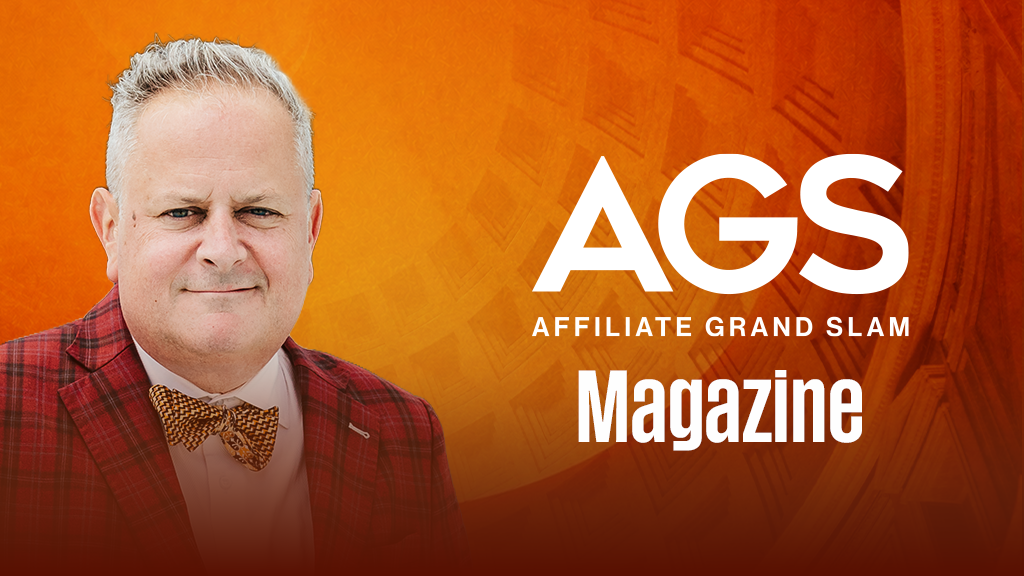
Before traffic meant clicks, calls and leads from AI-generated content, it meant billboards and magazines created by artists and writers, then printed and delivered by “sweaty humans”. Three decades later, servers and AI do much of that work, but the goal of bringing publishers and advertisers together remains the same. Yancy Naughton, Founder of HasTraffic, talks about taking his old-media skills to a new continent, starting his company after a failed soft launch and keeping it moving for 14 years.
HasTraffic came from years of Naughton building advertising and publishing networks. In the 1990s, he founded Golf Magazines in the Southwestern US. Then followed by real estate and lifestyle publications in the Northeast through the early and mid-2000s.
The idea behind the work was always to find people interested in an offer and make it operational for both the publisher and advertiser. Back then, it relied on writers, graphic artists, printing and physical delivery. And unlike today, traffic was handled by people rather than servers.
By 2009, Naughton knew the next publication he would launch would not be another printed one. With what he calls a “very open schedule in the 2009 financial crisis”, he decided it was time to move.
“I literally grabbed eight bags, two kids and one wife, and tried a new continent,” he says.
That move took him through the launches of Elephant Traffic and Zero Park. At Elephant Traffic in Prague, he came across a startup with plenty of domain traffic but not enough advertisers buying it. Naughton succeeded in matching the inventory to the US market, where advertisers were already hungry for traffic. And within a few months, the company was doing millions in monthly turnover. It worked, but the amount of domain inventory they could access was limited.
By 2011, Naughton saw how the auction model could be opened to more types of traffic. He and his former Elephant Traffic colleague Robert Gryn spent the better part of six months preparing a platform that could bring more traffic channels into the same marketplace. Then, on the exact day of the soft launch, the Amazon Web Services (AWS) servers went down. Naughton and Gryn went their separate ways amicably. Within a month, Naughton launched HasTraffic at Affiliate Summit East in August 2012.
With HasTraffic established, Naughton brought over what he had learned from Elephant Traffic and Zero Park, including what he did not want to repeat. At both companies, his ideas were still suggestions. One of the tipping points at Elephant Traffic came when upper management wanted to raise margins even as revenue was falling. For Naughton, the decision put the platform’s interest ahead of what the market was already saying through its bid prices.
But with HasTraffic, he had control over how those ideas were applied and how the platform would operate. That gave him room to test a different approach. He settled on 13 percent as the ideal margin and made the exchange more transparent. Publishers could see the margin and final sale price of their traffic. Advertisers could see the last trade price of the traffic stream. 14 years later HasTraffic still sits between publishers with traffic to sell and advertisers who want visitors. The auction brings both sides together and then allows demand to determine the price.
That structure reflects how Naughton sees business itself. “Business is a human endeavor in which cooperation results in growth,” he says. Rather than a zero-sum game where everyone fights over a limited set of resources. HasTraffic started with domain traffic because that was the supply available. But Naughton always planned to bring different channels, locations and verticals onto one platform.
Once domain traffic was running, HasTraffic turned to what Naughton calls the “remnant space”. This included out-of-geo or “international redirect” traffic, where visitors did not match an advertiser’s target location and were redirected elsewhere. It often went unmonetised or earned very little through revenue-share links. HasTraffic applied its cost-per-click (CPC) model to this traffic and placed it on the auction. Instead of relying on one or two buyers, publishers could have multiple advertisers bidding for it and let the market find its value.
From there, HasTraffic continued adding more channels. Email became a major channel, followed by short message service (SMS) and display, while content sites and community groups entered the mix. Then calls grew, particularly in finance and lead generation. As more traffic channels entered the platform, social media was starting to take shape too. HasTraffic was early with HasSocial and stayed with it as influencer traffic grew and needed a fair place in the market. At the same time, feed traffic from push, pop, and display continued to run in the background.
Because new channels could be added to the same auction, HasTraffic did not have to rebuild the business every time traffic shifted.
In 14 years, HasTraffic has watched companies come and go, merge and dissolve. Asked what kept it going, Naughton’s answer is straightforward. It’s because of diversity and flexibility.
Had the company dug its heels into one channel, location, vertical, or medium, it would have needed to rebrand at a minimum or restart entirely. Instead, HasTraffic remained a tool advertisers could use to find traffic. And publishers could use it to find a fair market value for theirs. That ability to move is also shaping what comes next. Now, it has to adjust to what AI makes possible.
Naughton likes to say, “AI is good, but RFI is better.” Hint: The R stands for “REAL” and I for “INTELLIGENCE”. We’ll leave you to work out the F.
It started as a fun take on an unavoidable topic, but the point is that AI should enhance human intelligence rather than replace it. He has already seen it help with content creation, A/B testing and analysis. But what concerns him is how it can be used on the darker side.
He says, “The biggest threat of AI is not replacing real intelligence in the advertising space. But rather the threat comes from allowing bad actors to create fraudulent traffic, leads and the like. The Emperor has a lot of storm troopers using AI as a path to the Dark Side.”
For HasTraffic, this means staying ahead in another cat-and-mouse game, using the same tools as those trying to work around the system. Even with all the new technology, Naughton still sees CPC pricing as the company’s best filter against bad publishers. The force is stronger on CPC because buyers drop bids or block targets much faster on media buys than cost per acquisition or cost per lead affiliate traffic.”
This article was originally published in AGS Magazine. Explore the latest issue for more in-depth interviews, straightforward analysis and informed perspectives from across the affiliate and performance marketing industry.