- AGS Events
- Meetups
- News
- Magazine
- Media Partners
- About

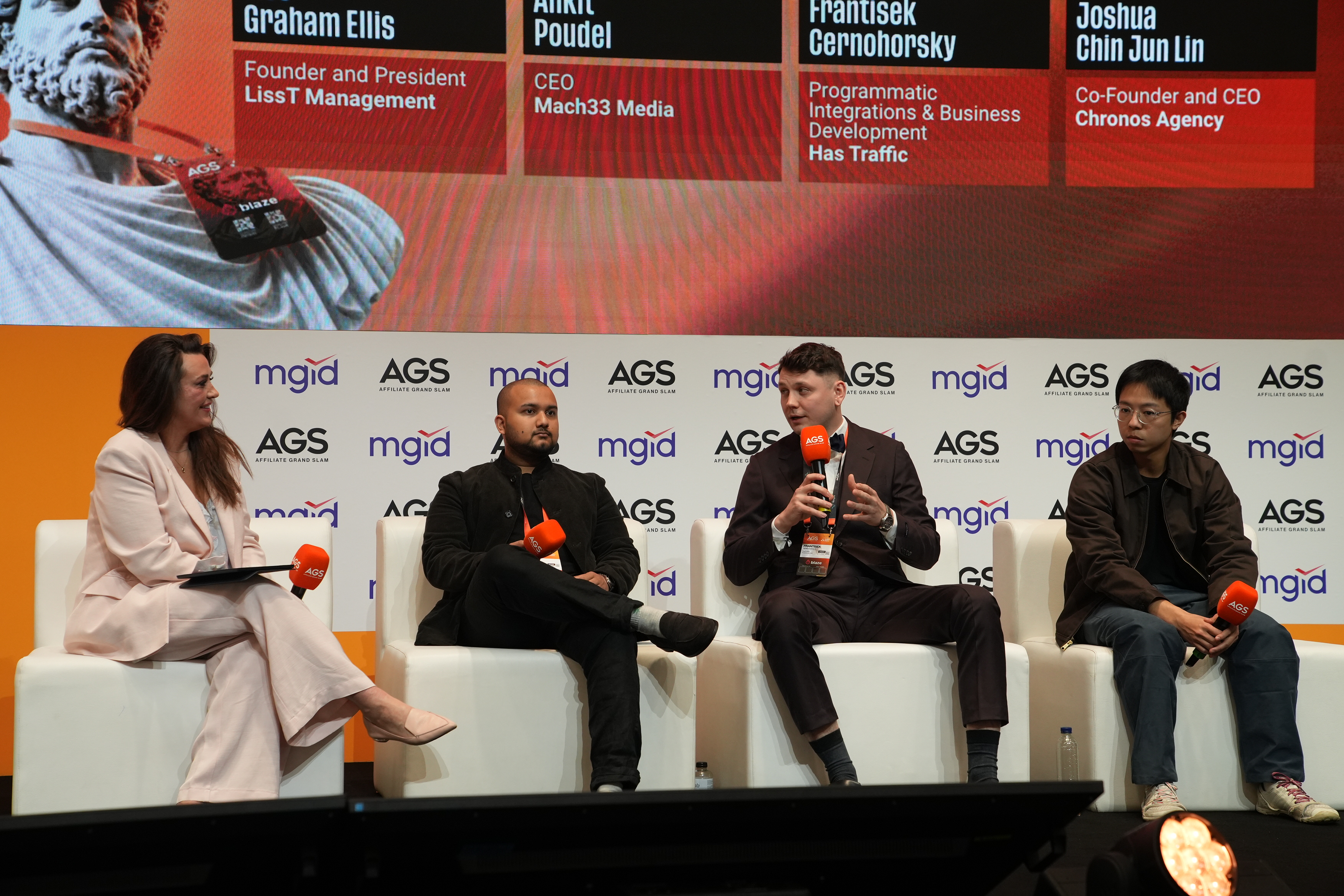
Winning a customer once does not guarantee a second purchase. Speakers discussed how acquisition, relevant communication and product quality influence repeat business during the panel titled “Retention Wins: Turning Subscribers into Loyal Customers”, held on 05 November at Affiliate Grand Slam in Rome.
The discussion featured Liss Graham Ellis, Founder and President of LissT Management; Ankit Poudel, CEO of Mach33 Media; Frantisek Cernohorsky, responsible for Programmatic Integrations & Business Development at HasTraffic; and Joshua Chin Jun Lin, Co-Founder and CEO of Chronos Agency.
The conversation addressed email and SMS marketing, customer profitability and the risks of using discounts without understanding purchasing behaviour.
Poudel and Chin argued that retention starts with acquisition. The types of customers a business attracts and the offer behind their first purchase influence whether they buy again.
A large introductory discount may secure a sale without creating lasting interest in the product. Gifts, bundles and other benefits give businesses ways to compete beyond price alone.
Poudel encouraged businesses to assess customer value over time rather than judge acquisition solely by its initial cost. For subscription businesses, understanding how quickly later purchases recover that investment helps determine what they can afford to spend.
Cernohorsky emphasised matching marketing promises with the landing-page experience. When the two do not align, businesses risk losing potential customers before establishing a relationship.
Chin identified the period immediately after purchase as an opportunity to communicate whilst customers remain interested and willing to engage.
Ellis encouraged brands to use more than one channel, including SMS. Explaining the importance of that moment, she said: “After the point of purchase is the golden opportunity to win their loyalty.”
Relevant follow-up messages can help businesses build on that initial interest rather than let the relationship end with a transaction.
Poudel recommended treating prospective buyers, first-time customers and repeat purchasers differently. Surveys can help explain why someone bought a product, what problem they wanted to solve and which messages are likely to convert next.
Chin discussed using short quizzes when collecting subscribers. Their value extends way past securing an email address, as the answers allow businesses to group customers by their interests and tailor subsequent messages.
Collecting that information without using it wastes an opportunity to make communication more relevant.
The speakers urged marketers to look further than email opens and individual campaign revenue.
Poudel discussed the click-to-conversion ratio, or the proportion of people who click and subsequently buy, as a way to assess whether messages and landing pages work together.
Ellis highlighted deliverability, or whether emails reach their intended recipients. Problems at that stage can undermine results before customers see an offer.
Chin also questioned the reliability of opens as AI changes how inboxes process messages. Purchasing behaviour and longer-term profitability provide a more useful basis for decisions.
Poudel recommended identifying why customers stopped buying before approaching them again. An improved product, a better service or a resolved delivery problem gives a return message a meaningful reason.
Cernohorsky stressed that product quality matters when it comes to loyalty, particularly in gambling, where competitors can offer larger bonuses. Incentives alone cannot replace a product customers want to continue using.
Chin cautioned against discounting purchases that might happen anyway. He suggested using roughly twice the normal repurchase interval as a starting point for win-back activity. If customers usually return after 40 days, an 80-day trigger may help distinguish inactivity from a normal purchasing cycle.
Affiliate Grand Slam takes place from 02-05 November 2026 at Fiera Roma as part of SiGMA Group’s Rome events. Its programme brings affiliates, advertisers, media buyers and marketing service providers together for discussions on customer acquisition, retention and advertising technology, as well as an exhibition and networking opportunities.
Find further session details and discover the topics covered through the Affiliate Grand Slam Rome agenda.