- AGS Events
- Meetups
- News
- Magazine
- Media Partners
- About

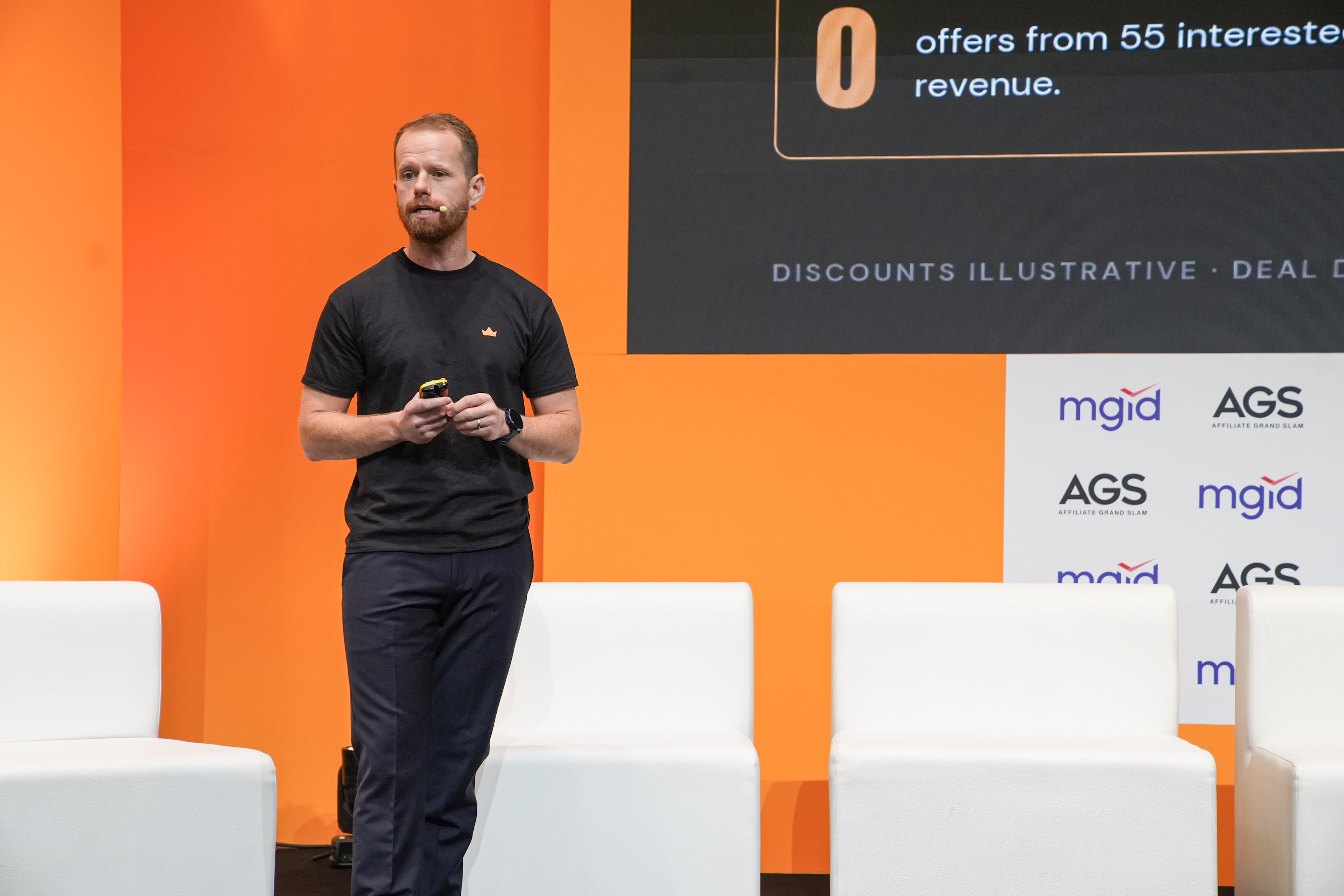
Andy Allaway unpacked the risks that can weaken an agency exit at AGS Rome 2026 on 05 November. The Empire Flippers CEO’s Day 3 keynote was Build, Scale, Sell: The Agency Founder’s Exit Playbook. His opening example compared two hypothetical agencies, each making $3 million in profit. Agency A sold for $12 million, mostly in cash upfront. Agency B attracted half that, with less cash upfront.
“We talk about revenue a lot when we’re building businesses, but buyers buy based on your profit.” The multiple a buyer pays then depends on the risk they see in the business. A bigger headline figure can still involve delayed payments or conditions tied to future performance. Allaway linked that risk to seven recurring problems affecting both price and payment terms.
Agencies often grow around the founder’s ability to sell and deliver the service. That becomes a problem when client relationships and daily operations cannot continue without them. Allaway suggested taking four weeks away, or at least working through what would break during that absence. Those gaps identify where the owner needs to replace themselves before selling.
A large account can grow into a dangerous share of the business. Allaway described an agency in which one client accounted for more than 40% of revenue. Despite 55 buyers signing confidentiality agreements, none reached the offer stage. His preferred benchmark was no individual client contributing more than 20% of total revenue.
Buyers understand that agencies lose clients, but they need to know how often it happens. Longer retainers can help make future revenue more predictable. High churn can leave part of the sale price dependent on clients staying. For the seller, that means waiting for money and carrying risk after the handover.
Personal email accounts, personal payment cards and special agreements can complicate a handover. Company accounts and written contracts make it clearer what a buyer can take over. Allaway described a completed deal that had to be unwound because an affiliate agreement would not transfer. The agreement belonged personally to the seller, leaving the buyer unable to inherit it.
Hiring a team does not remove the risk if one person still controls all the delivery. In one example, a single contractor handled the service, making part of the payment conditional on that relationship continuing. Documented processes help a buyer understand how the work happens. Bonuses or other incentives can also give key staff a reason to support the sale and stay afterwards.
Burnout can push owners towards selling just when they have stopped giving the business their full attention. Allaway warned that the sale process still needs an actively managed company. Declining businesses, in his experience, sold below asking prices that already reflected that decline. Waiting until exhaustion takes over can therefore affect both the valuation and the final offer.
An agency exit also depends on financial records that support the seller’s account of the business. Profit-and-loss statements, bank records and tax returns need to tell a consistent story. Allaway explained that mismatched tax returns can make bank financing difficult for a buyer. In one case with mismatched returns and other risks, the buyer could pay only 25% upfront.
A recent sale illustrated what a prepared business could achieve. Allaway said the agency secured a letter of intent within 32 days of listing. It effectively achieved its asking price, with 80% cash upfront and a multiple twice Empire Flippers’ typical agency level. The founder had stepped away from daily operations, with documented processes and tracked client churn supporting the business. Bank financing helped fund the purchase.
In Allaway’s timeline, preparation for an agency exit begins about 3 years before a planned sale. That gives owners time to organise financial records, review contracts and align the team with an exit. He closed by returning to Agency A and Agency B. “And importantly, the work to decide which one you are doesn’t happen at the point of sale. It happens in the years leading up to it.”
TrafficStars supports AGS Rome 2026 as main sponsor. It connects advertisers with large-scale premium inventory across global markets, offering both self-serve and fully managed campaign options.
Join us for the final day of AGS Rome 2026 on 05 November. Visit Affiliate Grand Slam for today’s programme and event details.