- AGS Events
- Meetups
- News
- Magazine
- Media Partners
- About

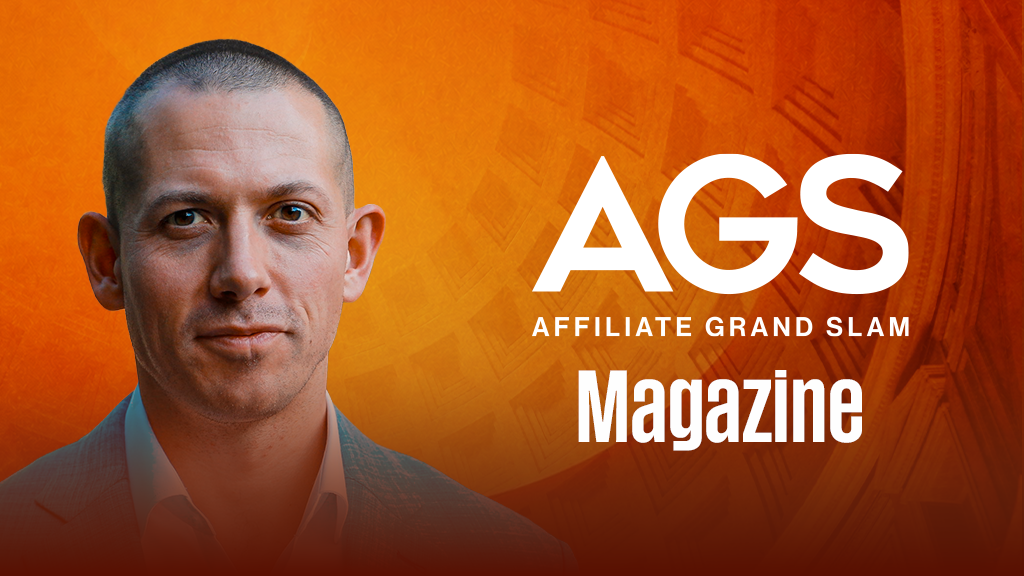
Petroleum engineering promised money, but not the freedom people usually wanted. He left oil and gas for online marketing and eventually built a business around supplements. Sergei Glaukus explains how founders can launch a product without buying stock upfront, identify the best traffic sources and increase average order value (AOV) and customer lifetime value (CLV).
Growing up in a small rural town, Sergei believed oil and gas was the only industry where people became rich. So he studied petroleum engineering and, in his first year, was named the best of 500 students. The award came with a scholarship and a three-month internship at a Canadian oil company. But once he experienced the office job, he realised it was not for him. He wanted the freedom to work where he wanted, with whom he wanted and when he wanted. Remote work was still uncommon then, but he figured out that entrepreneurship and online marketing were his way out.
“There is more to making money, and for me it was the freedom aspect that played a big role in my decision to make the transition,” he says.
But entrepreneurship came with its own problems. Sergei knew very little about business when he entered his first partnership, while his partner knew slightly more. He trusted him and learned from him. To his dismay, Sergei says the partner stole all their projects. He was left in a negative state of mind with €50 in his pocket. But he did not let this discourage him. Instead, those experiences taught him to trust his own judgement and get back on his feet.
Hard work and cheap meals got him through, pasta with ketchup included. Within six to nine months, Sergei was earning more in one month than he had made with his former partner in a year. Coming through it also gave him a thick skin for the business problems that followed. Or, in his words, enough to stop them from messing with his “inner zen” too much.
Sergei carried that experience into the way he built businesses. He did not like taking loans, bringing in investors or relying on partners. He believed a business should survive through its own work and reinvest its profits. For someone starting as a one-person operation, there was usually more time than capital.
His first businesses sold digital products such as ebooks and video courses. Once created, they could be sold repeatedly without producing any additional units. Sergei worked on the content and handled the copywriting, IT, bookkeeping and media buying himself. Every job he learned was one less thing he had to pay someone else to handle. Because of that, he got used to building businesses and funnels without upfront product costs. This is also what he likes about affiliate marketing. It removes product fulfilment from his responsibilities and allows him to market a product without manufacturing, packing or shipping it.
But supplements were different. When Sergei started selling them, very few companies in Europe offered dropshipping or white-labelling for supplements. He had to order 1,000, 2,000 or even 5,000 units before making a single sale. That tied up cash he could have used for media buying and left him carrying the loss if the units did not sell.
Luckily, dropshipping providers such as Marketlabs in Europe and ShipOffers in the United States now let founders choose supplements from a catalogue without committing to a minimum order quantity (MOQ). A founder can order one unit today, 300 tomorrow and one the day after. The provider applies the brand’s label, packs the order and ships it directly to the customer. It also buys and holds the stock. Because the same formula can be sold to several brands, the provider can keep inventory moving and carry the financial risk rather than passing it to a single founder.
This is what Sergei means by launching with zero upfront cost. Production, advertising and the other parts of running a business still cost money. What the founder avoids is paying for thousands of supplements before knowing whether the product will sell.
Removing the inventory risk does not make every supplement a good product. So before choosing one, Sergei spends time researching what people are already buying.
“In order to determine whether a supplement deserves to become a real product, you do not need to reinvent the wheel,” he says.
For someone entering the market, he believes the worst decision is creating a product simply because it sounds cool. Founders should first develop a feel for the supplement market before attempting to launch an original product and funnel. Sergei advises them to study products in a specific niche that are already selling through cold traffic.
He calls the process swiping. But this does not mean copying another company’s product, ads and funnel. It means looking closely at something proven, understanding why it works and using those lessons to create your own version.
In practice, Sergei starts with popular ad spy tools to see which products and campaigns are currently running. The free ad libraries available through Facebook, Google and TikTok can also show which offers, angles and ad creatives are active. When the same funnel appears repeatedly, he examines it more closely. Trade shows are another place to research. Conversations with people working in the market can reveal which products are selling at that moment.
Finding demand is one part of the research. The supplier is another. Sergei once worked with a manufacturer that delivered a small order late and in a completely different bottle from the one he requested. He now advises founders to work with suppliers recommended by people they trust. For someone starting without manufacturing experience, he prefers an established European white-label dropshipping provider that handles quality, safety, and compliance requirements every day.
Once Sergei has found a product worth testing and a provider that can fulfil orders, the next step is to find out whether people will buy it. He normally starts with email because existing customers are more likely to buy from the brand again.
After the first email tests, the product moves to native or YouTube ads. His team monitors the first €500–€1,000 of ad spend closely. If a channel does not return at least 50–70 percent of that money, they consider it a possible failure of the funnel. But they test other ads and angles before deciding whether the problem is the traffic, the creative or the offer itself. If those initial tests do not produce good results, his team may try other traffic sources or give the offer to affiliates.
Once a product starts acquiring customers, Sergei looks at AOV, or how much each buyer spends per order. His first method is a one-click upsell immediately after the purchase. The customer sees an offer for more of the same supplement at a lower price per unit. Sergei says this page alone can add €20–€100 to AOV.
The product bundles need testing too. His company once offered one-, three- and six-bottle options. It later added a pop-up for customers who chose one bottle, offering them the chance to buy two for a slightly higher total price. Larger orders can also include free shipping, ebooks or another physical product.
Holiday promotions give existing customers another reason to buy more. Sergei has offered 12 or 24 bottles at a heavily discounted price for Easter. Whatever the promotion, refunds come off total revenue to give the real AOV.
Subscriptions work differently. They may not increase the first order by much, but they create repeat purchases. These can include a monthly supplement delivery or a VIP ebook club that helps customers with the problem the supplement is meant to address. These repeat purchases feed into CLV, which covers what a customer spends throughout the relationship.
For repeat offers, email has traditionally produced the best results. He also uses phone calls, short message service (SMS), WhatsApp, Telegram, physical mail and any other channel that suits the business.
One of Sergei’s more unconventional strategies is promoting competitors’ products to his own customers. “Once you get your ego out of your way, you will find that promoting your competitors’ products to your customers will increase your bottom line,” he says.
If a customer needs something his company does not sell, cross-promotion allows him to earn from that demand and increase CLV without creating or stocking another product. It can work both ways, with competitors promoting his products to their customers too.
Bootstrapping works well when a founder is testing products, protecting cash or entering a trend without knowing how long it will last. It reaches its limits when the goal becomes building a large brand around a unique product.
Selling hundreds of thousands of units each month requires enough capital to keep large quantities in stock. A founder may be able to negotiate a different arrangement with a dropshipping or white-label provider, but that depends on their relationship with that provider. A larger business needs people too. Sergei believes a handful of reliable people can still operate a company making between €5 million and €10 million in revenue. As revenue grows past that point, more people are needed, although he admits AI may change how far a small team can go.
But not every product is meant to reach that scale. For those tied to a short-lived trend, bootstrapping lets the founder sell without committing to a large inventory:
“You don’t know when the wave will end, but as long as you surf it, you will make sales.” Sergei says.
This article was originally published in AGS Magazine. Explore the latest issue for more in-depth interviews, straightforward analysis and informed perspectives from across the affiliate and performance marketing industry.