- AGS Events
- Meetups
- News
- Magazine
- Media Partners
- About

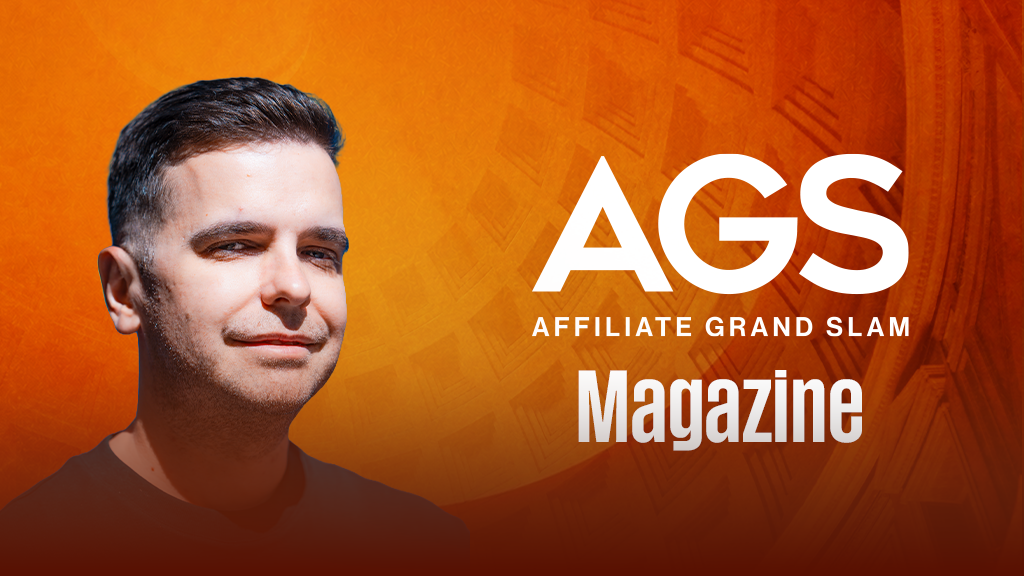
He got into affiliate marketing before most people knew what to call it. Nearly three decades later, Attila Odri, Founder of iAmAttila, has built a career around an industry that rarely stays still. From early websites and electronic dance music (EDM) parties to his book From Zero to Super Affiliate, his story is also one of knowing when to move, when to stay put and how to keep going when the market changes.
Attila first got into affiliate marketing in 1997, while he was still in high school. Technology was already something he gravitated towards. His school had a strong IT environment that encouraged students to build things, and Attila started spending more time with Linux and the internet. One thing led to another until he discovered that a website could also be a business. That was his entry point into affiliate marketing.
“You could actually build a website and put banners on the website and get paid for everything,” he recalls.
What makes the story more interesting is how early it happened. Attila wasn’t joining an industry after years of watching other people build careers in it. He was figuring things out while the commercial side of the internet itself was still developing. But affiliate marketing did not immediately become his full-time career.
He stepped away for several years and went into other kinds of work, first in advertising sales with Yellow Pages in Canada and then in web hosting. That break would eventually take him somewhere completely different before bringing him back to affiliate marketing again.
That “somewhere completely different” turned out to be EDM. Attila started organising parties in Canada, booking DJs including Armin van Buuren, Paul van Dyk and Tiësto.
When that chapter ended, Attila had also moved to Europe. Living in Serbia and unable to speak the local language, finding a conventional job wasn’t easy. That eventually brought him back online and to the GFY.com forum, where he returned to affiliate marketing full-time. He initially worked in adult affiliate marketing until Google Panda and Penguin changed the landscape.
“I was like, OK, what do I do? Let’s switch to mainstream.”
So he did. Attila moved into mainstream affiliate marketing and found success with app installs. Within a year, he says he had made his first $1 million in profit. That ability to change direction would come up again and again throughout his career.
After nearly three decades in affiliate marketing, Attila has seen enough verticals rise, peak and slow down to know that very little stays hot forever.
Right now, he sees some of the strongest opportunities in e-commerce, debt-relief lead generation in the US and make-money offers. Part of that, in his view, comes down to where consumer demand is moving, particularly as more people look for ways to save money, get out of debt or increase their income.
But knowing when a market has changed is just as important as knowing where the opportunity is. Search arbitrage is one example. Attila spent years in the space, but says it has become far more difficult as compliance has tightened and the economics have become less favourable. He had already seen the warning signs years earlier. That is where experience starts to matter. You learn that an offer, traffic source, or entire vertical can work extremely well for years, only to stop working suddenly.
For Attila, that is one of the biggest advantages of affiliate marketing. “That’s the beauty of affiliate marketing. You’re not chained to a vertical.”
He has seen affiliates move quickly when conditions change. In US auto-insurance lead generation, for example, tighter compliance pushed many media buyers towards other types of offers. By the time demand returned, many had already moved on.
Paid traffic makes that flexibility possible. The skills behind buying traffic, testing offers and finding angles can move with you. You just have to know when it’s time to take action.
Attila has witnessed plenty of affiliates make serious money once. Then disappear. He calls them the industry’s “one-hit wonders”: people who find one successful campaign but never manage to repeat it. The affiliates who stay around for 10 or 20 years tend to behave differently.
“The top affiliates move fast,” Attila says. “And they’re not scared to break things and lose money.”
That speed gives them an edge, but so does how they treat the business when things are going well. He has also watched people start spending as soon as the money comes in, on watches, cars and expensive nights out. The more disciplined ones keep money aside for slower periods, build a reliable core team and understand that a profitable run can end just as quickly as it started. For him, longevity comes down to treating affiliate marketing like a business rather than a lucky streak.
But moving fast doesn’t mean jumping at every new opportunity. Attila sees shiny-object syndrome as one of the biggest mistakes affiliates make. They hear that someone is making money in another vertical, abandon the systems they have already built and start again somewhere else. Then, when that doesn’t work quickly enough, they move on again.
There’s a difference between adapting when the market changes and constantly chasing the next thing. The people who stay in the game learn to tell the difference.
That same mindset sits behind Attila’s book, “From Zero to Super Affiliate“.
The book was written for people coming into affiliate marketing with little or no experience. Even as the industry has changed, Attila says the idea behind it has stayed the same: give someone the foundations and help them become better at figuring things out for themselves. Because in affiliate marketing, standing still for too long can be expensive.
“You have to be very good at learning things quickly. If you take too much time to learn stuff, it’s already too late.”
His example has nothing to do with campaigns. When one of his washing machines broke, Attila went on YouTube, watched a few videos and figured out what needed replacing. The part cost around $10. Someone else might have replaced the whole machine or paid a repair bill simply because they didn’t know how to fix it.
For Attila, affiliate marketing works in much the same way. You won’t always know how to solve the problem in front of you, but you need to be willing to work it out quickly. That approach has followed him from building websites in the 1990s to moving between different verticals and traffic models over the years.
The tools may have changed, but the ability to adapt and figure things out hasn’t.
This article was originally published in AGS Magazine. Explore the latest issue for more in-depth interviews, straightforward analysis and informed perspectives from across the affiliate and performance marketing industry.