- AGS Events
- Meetups
- News
- Magazine
- Media Partners
- About

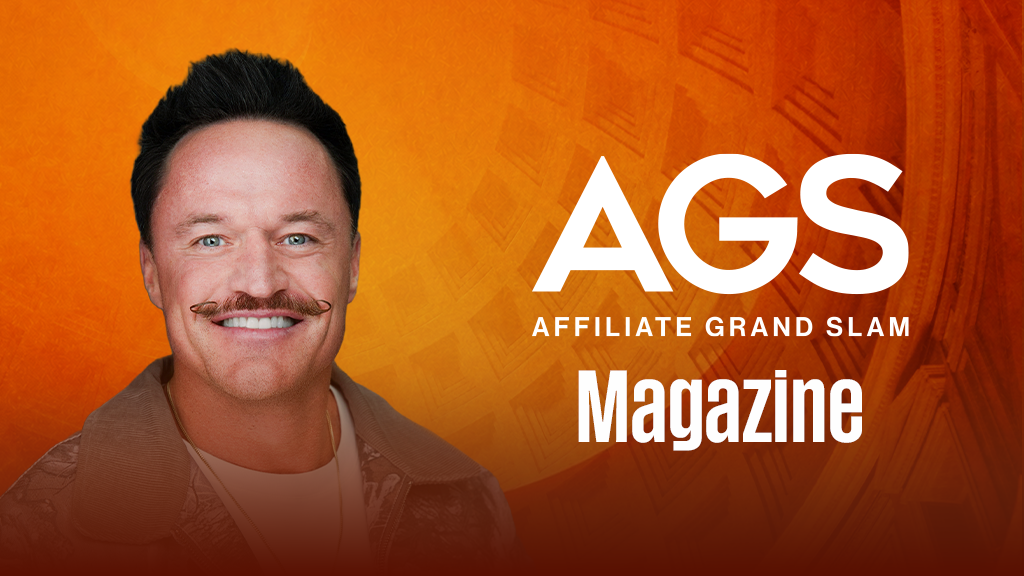
Brands might see giveaways as gimmicks rather than legitimate acquisition channels, while consumers may be wary of them as scams. Van Oakes, Founder of Goat Media, has built a business around proving otherwise. He talks about what it really takes to make giveaway marketing profitable, why running them back-to-back isn’t necessarily the problem, and why the prize you choose matters more than you think.
Giveaway marketing can be one of the most effective acquisition channels, but it is also one of the hardest to pull off properly. It takes a whole village and a mountain of resources to run one. And if someone tells you it’s impossible to lose money doing it, Oakes would tell you they’re lying.
Start with the numbers. Say a brand spends $100,000 on ads and generates $300,000 in revenue. Take out the ad spend and another $100,000 for the vehicle being given away, and on paper there’s still $100,000 left. But the cost of goods sold hasn’t been accounted for yet at a normal markup; that could wipe out what looked like profit. You ran the whole campaign only to end up at zero.
Oakes builds the giveaway campaign differently. Around half of the entries can come from digital products or other offers with no physical product, shipping or associated cost. That brings down the blended cost of goods and could be the difference between breaking even and actually making money.
The prize itself doesn’t always need to cost as much as it looks like, either. A vehicle might have a perceived value of $100,000, but through manufacturer partnerships, media trades or other arrangements, the actual cost can be much lower. Then there’s the part that doesn’t immediately show up in the numbers.
“150,000 people just gave me an email and a phone number. That’s the actual product of the campaign. The vehicle was just what I paid to get it.”
So for Oakes, breaking even on the front end isn’t necessarily a bad result. If the campaign also gives the brand a huge database it can keep marketing to, the value doesn’t end when the winner gets the keys.
Breaking even may already be a good result. But one campaign Oakes ran in October 2019 went much further, generating $7 million in a month, including $1.6 million in a single day, and ending with $4 million in profit.
At the time, his team was running engagement campaigns at a smaller budget before moving the strongest audiences into conversion campaigns. It worked so well that almost everything they loaded into the ad account performed. The only reason they had to stop was that they were hitting daily spend limits and couldn’t get more ad accounts live fast enough.
But some brands are still sceptical about giveaways. When that happens, Oakes looks at what they are already paying to acquire a customer through channels like Meta. His question is simple: what would it cost to build that audience while also reducing your customer acquisition cost? For Oakes, that changes what the giveaway actually is.
“It’s not a stunt, it’s an acquisition channel that happens to look like a stunt.”
The campaign doesn’t lose its value once the giveaway is over. A gimmick gives you a spike, it ends, and nothing really changes. A giveaway built as an acquisition channel can leave you with a much bigger audience you own and can market to again and again.
Some of Oakes’ strongest giveaway brands run them one after another. For him, running them back-to-back isn’t the issue; trust is.
The first time a brand runs a giveaway, people don’t know if it’s legitimate. They’ve probably seen scam giveaways on their feed before, and there’s nothing yet proving yours is any different. So the first campaign is where you prove it. That’s when someone wins. The brand hands over the keys, films it and posts it everywhere.
That handover video isn’t just nice content to have afterwards. For Oakes, it is one of the most important things the campaign produces because it makes the next giveaway more believable.
After a few campaigns, people have watched the brand actually deliver on the prize. As that trust builds, the cost per entry can start to come down.
But proving the giveaway is legitimate also means getting the legal and compliance side right. The rules need to be clear, the advertising needs to match what the brand is actually offering, and all legal requirements need to be handled properly. Oakes was surprised to see how many brands weren’t taking this seriously enough.
“The giveaway business runs on trust. The compliance side isn’t separate from that; it is that.”
If the rules are confusing or the advertising says one thing and the terms say another, people have less reason to believe the giveaway is legitimate in the first place.
Where brands get into trouble is launching the second giveaway before they have properly closed the first. If nobody has seen a winner yet and another promotion suddenly appears, that’s when you start looking like a scam.
Oakes’ team ran giveaway campaigns for Diesel Power Gear, helping the business grow its revenue from a few million to tens of millions. That experience also showed him what smaller or newer brands can’t simply replicate.
The first is influence. Over the years, the brand built a huge influencer base. People might not trust a brand they’ve never heard of, but they may trust a content creator they’ve followed and watched for years. For smaller brands, that doesn’t mean building the same kind of network overnight. Find one content creator your audience already believes and put them at the centre of it.
The second is content volume. Some brands treat a giveaway like an event. They launch it, run some ads and call it a day. Oakes runs it very differently. He has a full-time content team filming throughout the campaign; that’s five people, filming 24/7.
For his team, everything becomes content, from building and revealing the prize to filming the winner getting the keys. One prize can give them a year’s worth of assets.
So the giveaway itself creates far more than entries. As Oakes puts it, “The giveaway is not the campaign. The giveaway is the excuse to make content, and the content is the business.”
For brands running their giveaway campaign, Oakes sees one mistake more than any other: choosing a prize because it is expensive rather than because the audience actually wants it.
Creative can change, budget can change, and targeting can change, but the prize can’t. Once it has been announced, you’re stuck with it. Brands naturally reach for something with obvious value, such as cash, a prestigious watch or a luxury trip. That can bring in a huge number of entries and make the cost per entry look great. But then you try to sell something to those people and realise they were never really your audience. That’s where the prize starts to do more than attract attention.
“The prize is your targeting. It’s not a bonus on top of the campaign; it is the filter.”
If you gave away cash, you may have built a huge audience of people who like free cash, which is basically everyone. Give away a lifted truck, and you get truck people. Give away something almost anyone would want, and you get a much broader audience, whether they’re interested in your actual business or not.
So before choosing a prize, Oakes has a simple test: would your best customer still want it if it wasn’t free?
If they’d already be looking at it, saving pictures of it or thinking about buying one, that’s probably your prize. And there needs to be something waiting for them afterwards. A giveaway can hand you thousands of new contacts while they’re still paying attention, but if there’s no good offer, product or next step ready, that opportunity to convert them is gone.
It all comes back to the same mistake: treating the giveaway as the whole campaign rather than an acquisition entry point.
This article was originally published in AGS Magazine. Explore the latest issue for more in-depth interviews, straightforward analysis and informed perspectives from across the affiliate and performance marketing industry.