- AGS Events
- Meetups
- News
- Magazine
- Media Partners
- About

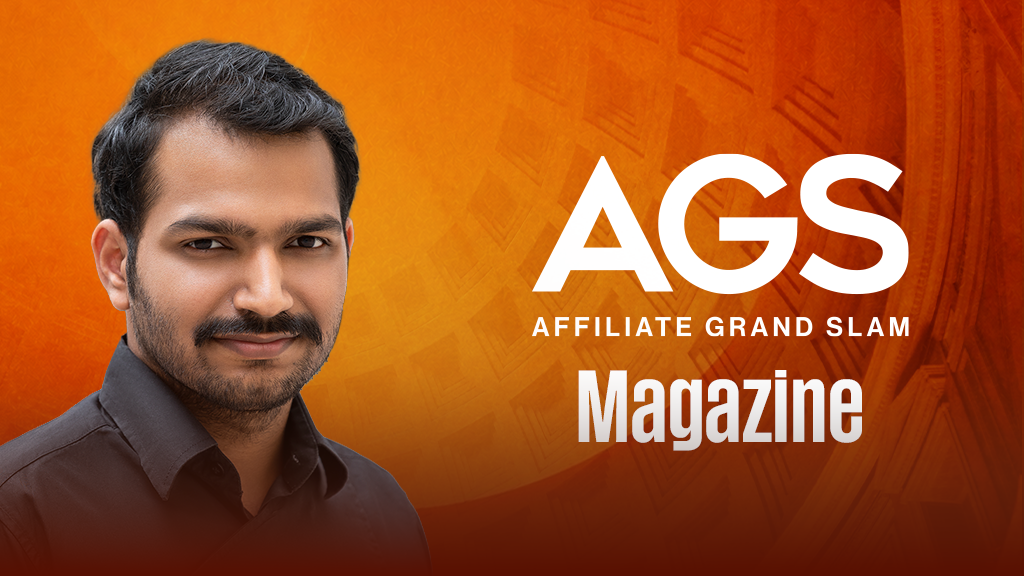
Kids his age were playing games and hanging out with friends. At 12, Ashish Gaba was already building his career in affiliate marketing. As the Founder & CEO of Worify, an AI-first marketing agency, Gaba talks about how AI agents can autonomously manage and optimise campaigns, and how agencies can adopt them without losing control.
Gaba’s entry to affiliate marketing was content arbitrage. In his own words: “Buy attention at a cheaper price, sell it for a higher one.” He had high-quality blog posts from years of writing, so he bought traffic to his own content and monetised it. Then the whole model collapsed in 2018. Giving up would have been the easier option, but that crash was only the beginning.
“Instead of quitting, I started spying on ads, studying what was actually winning in the market, and ran my first affiliate campaign myself.”
After a series of test campaigns, he realised he wasn’t pivoting; he was already building a career.
Content arbitrage taught him how attention is priced. But the most important lesson came from the 2018 crash: the tactic always dies, the skill doesn’t. Today, everything Gaba does, such as media buying, sales funnels, and agentic automation, is built on that.
Worify jumped on AI early and built it into its systems. One of the first things Gaba adopted was agentic AI, a system that can accomplish a specific goal with limited supervision. These AI agents working in loops can now autonomously manage and optimise campaigns: they monitor performance at the ad level, pause losers at a set threshold, shift budget toward winners, spin up variations, launch tests, and report back with findings and analysis.
Safe to say they work like a real human media buyer, only round the clock. Media buyers treat optimisation like a Monday morning ritual while AI agents do it at 3 am while everyone sleeps. The agents run workflows built from data and playbooks instead of generic best practices.
But there are still tasks Gaba would never let AI agents handle. He draws the line at anything that crosses reputation. He would never hand off a strategy conversation with a client, or let an AI agent make the final call on compliance or brand reputational risk. An AI agent can identify a risky angle that converts 30 percent better, but deciding whether to run the ad is a human job.
“Agents can spend my money, but they can’t sell my reputation.”
AI agents make campaigns faster, more efficient, and easier to scale. But agencies should be wary of losing control of their own systems in the process. They’re great on your team, but not to the point where you can’t explain your own accounts. A client asks why ad spend doubled on a Tuesday, and your honest answer is that the AI agent made the call. That’s the day you stopped being an agency and became a spectator. To stay in control, build a workflow based on your data and rules.
“Autopilot is great, but someone still has to be the pilot,” he says.
To safely integrate AI agents into your agency, Gaba shares the first place he’d put them and the last.
Gaba’s first place for an AI agent is reporting and monitoring. Let it watch your accounts, summarise what happens, and flag anomalies. This has zero downside because it saves time instantly and, more importantly, teaches you how the AI agent thinks before you hand over the steering wheel. Once trust is built, you can move to optimisation with tight budget caps, then creative testing.
The last place is client communication and huge, irreversible spend decisions. Don’t let an agent talk to your clients or move a large spend unsupervised until you’ve watched it make several agreeable small decisions. Treat it exactly like a new hire, because you wouldn’t give them the master password on day one, no matter how smart they are. For Gaba, “Trust with agents is earned the same way it is with people; gradually and with receipts.”
But the one thing Gaba didn’t expect to entrust to AI agents so soon was ad creative iteration. He believed that humans would work on hooks and creative briefs the longest, because creative development felt sacred to him. But then, he let an AI agent take a proven winner and generate variations with new hooks, new openers, new formats, with the same core angle. And the hit rate surprised him; it multiplied the winning ad better than most junior creative strategists, shipping fifty variations in an instant.
He expected to trust AI agents with that task in 2027, not this year.
Asked what agentic AI will have made obsolete, Gaba says it’s the morning ritual. No more opening Ads Manager with a coffee, scanning yesterday’s numbers, and nudging budget by hand. Optimisation will be continuous and autonomous, happening long before anyone sits down at a desk.
He adds that team structure will take a hit too. Agencies built as pyramids of junior media buyers doing that manual work will flatten fast. By 2027, the agency will have fewer people, each directing a fleet of AI agents, judged on strategy and outcomes instead of hours spent inside the platform. The hiring question changes from “Can you run accounts?” to “Can you build the systems that run them?”
Ads dashboards are next, Gaba says, “Dashboards were made for humans to stare at. Soon the only one staring at your dashboard will be an AI agent, and it doesn’t need the pretty charts.”
This article was originally published in AGS Magazine. Explore the latest issue for more in-depth interviews, straightforward analysis and informed perspectives from across the affiliate and performance marketing industry.