- AGS Events
- Meetups
- News
- Magazine
- Media Partners
- About

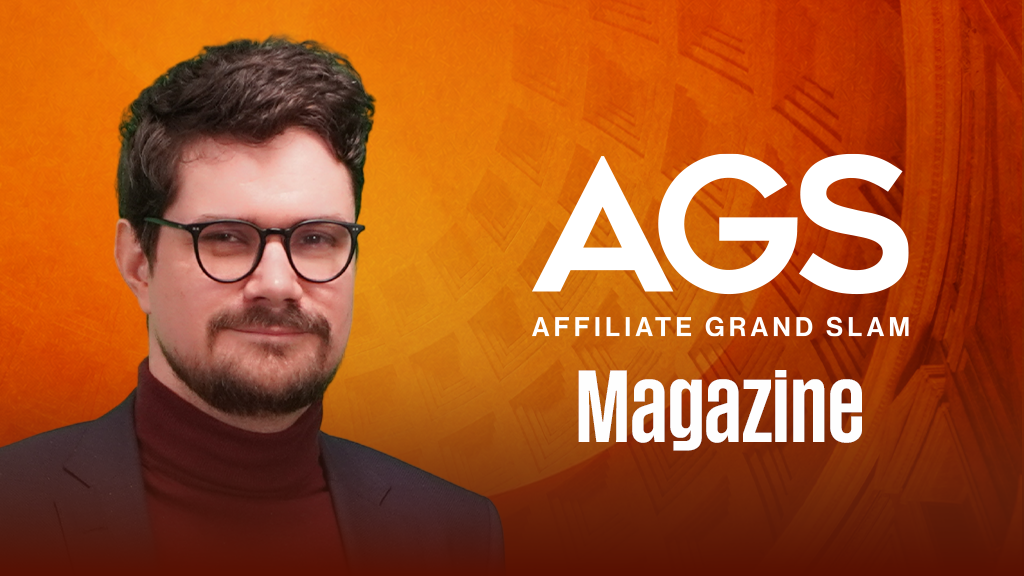
You might not have heard much about them, but you have most probably seen them before. When you search online, read a blog or finish a news article, native ads can be almost everywhere. Andrey Kravch, Co-Founder of Xevio, talks about where native ads fit in a world where new digital ad formats keep emerging, and how AI is making competition even tougher.
Before co-founding Xevio, Kravch spent more than five years at Taboola. Moving from the platform side to the agency side gave him the chance to work with clients beyond the markets he previously managed and, more importantly, build something of his own.
“I wanted to challenge myself. I wanted to have a bit more control. And with more control comes more challenge,” says Kravch.
He has now spent almost a decade in native advertising, long enough to see the format move far beyond what most people traditionally know it as.
Native ads started mainly as recommendation blocks below articles. Today, you can also find them on homepages, side rails and less traditional placements such as Apple News. But for simplicity, let’s stick with the classic example.
Say you’re reading something on CNBC. You finish the article, and you’re still in the mood to read something else. Below it, you see recommendations for other stories or content you might be interested in. That’s where native comes in.
The recommendation algorithm uses different signals, from the context of what you’re reading to your general interests, to decide what to show you next. It’s different from the traditional display ad that flashes somewhere on the page trying to get your attention. Native fits more naturally into what you’re already doing. You’re reading content, and it gives you something else to read.
If you were to ask Kravch whether native ads should replace Facebook, TikTok, Google or whatever new advertising platform comes next, his answer would be no.
“Native is a diversification channel, so it’s not meant to replace Facebook. It’s rather an amplification channel,” says Kravch.
That’s why native works better alongside other channels rather than on its own. Someone might discover your product through a native ad and not buy immediately. Later, they might search for it on Amazon or come across the brand again on Facebook. That support role is also why native can be harder to judge on direct ROAS alone. Facebook might be where the conversion takes place, but native could have been the first place that introduced the person to the product.
Kravch saw the power of native ads first-hand through a campaign he ran with one client.
The client was already active on Amazon and Facebook when they added native advertising. The campaigns performed well for the first few months but eventually became more expensive and barely broke even. So they switched them off. Then about a month later, the client came back and asked Kravch to turn native back on. Their Amazon sales had dropped. Their Facebook performance also slightly declined. The reason was fairly simple. Before someone can search for your product, they have to know it exists. Native had been doing part of that job in the background.
That’s what makes it a support channel. You may not always see its full value by looking at the native campaign alone, but remove it and you might start seeing the difference elsewhere.
For Kravch, using AI in native advertising is a double-edged sword. Like everywhere else in digital marketing, AI has made it much easier to get started. AI can automate content production to an extent and handle parts of campaign optimisation too. Teams can launch faster, test faster and manage more without needing as many people.
“You don’t need 50 people anymore. You probably need five,” says Kravch.
Of course, if something becomes easier to enter, more people will try it. And that’s exactly what’s happening. There is now a bigger crowd trying native advertising with the help of AI. The problem, according to Kravch, is that some of them are doing it without really understanding native advertising in the first place. They find something working using spy tools, replicate it, and produce 10 times as many versions of the same thing.
“This is not media buying on native. This is copycatting, ripping someone off. This is not media buying. This is lazy media buying at best.”
AI can speed up execution, but if the idea behind it is weak, you’re just producing more weak ads at speed. More advertisers also mean more competition for placements, which can push costs up. But native has more supply than before, too. It no longer lives only underneath an article, and platforms are finding new places to put it.
Kravch thinks this will naturally filter people out. Those who use AI to automate everything without learning how the channel works might get started faster, but they can disappear just as quickly.
Kravch warns, “You will test native faster, but you will drop out faster as well. So only the players who are really committed will be able to survive and succeed.”
Asked what native advertising could look like in five years, Kravch sees a few things happening.
First is consolidation. Some smaller native platforms could be acquired or absorbed by bigger ones, while others might fade away. This is because bigger platforms have more money, technology and publisher relationships to keep expanding.
Then there’s the advertiser side. Platforms will likely make native easier to use. More AI, automation, and dashboards could help advertisers launch campaigns and understand performance with less manual effort. That sounds good for advertisers, but there’s another side to it. If it becomes easier to start, more advertisers come in. More advertisers mean more competition.
The last shift is where native ads actually appear. Traditional publishers are competing for the same thing as social media, apps and AI platforms: people’s time. So native platforms will have to keep looking for new integrations and new places to reach users.
We’re already seeing some of that. Native has moved from the familiar blocks underneath articles into apps, news feeds and other placements. So five years from now, native advertising might still be around without necessarily looking like the native advertising people recognise today.
Kravch puts it: “The way we refer to native in the traditional sense is dying, that’s for sure. But the platforms themselves, they will remain.”
This article was originally published in AGS Magazine. Explore the latest issue for more in-depth interviews, straightforward analysis and informed perspectives from across the affiliate and performance marketing industry.