- AGS Events
- Meetups
- News
- Magazine
- Media Partners
- About

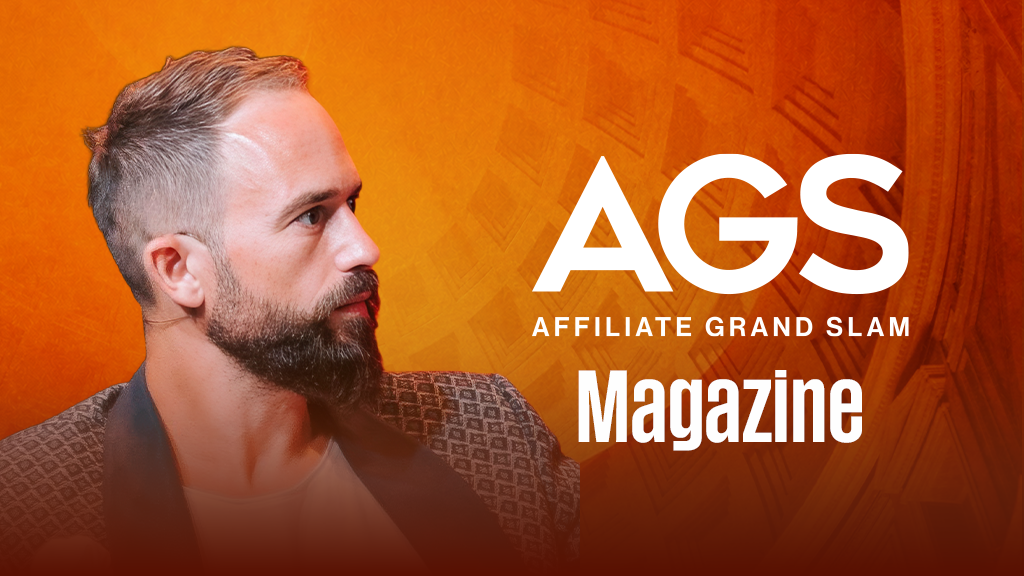
Philipp Schoeffmann will host the keynote sessions at AGS Rome, guiding some of the summit’s main stage conversations. He will also step into the spotlight himself with The Winning Ads Aren’t the Ones You’d Pick: What 28,936 Ads Taught Me.
His keynote looks at what winning ad creatives have in common across thousands of examples. Schoeffmann will challenge the audience to judge which ads performed best, then break down what separated the winners. He will also show how his team produces high-performing creative with AI at scale.
His feature in the first edition of AGS Magazine offers a preview of that topic. Read the full magazine article below.
He started in online advertising in 2002, long before his studio was producing thousands of videos for brands. Now, Philipp Schoeffmann, the Founder & Chief Creative of vznry.com, has a year’s worth of 28,936 ad creatives to learn from. He talks about how his team finds the winners, keeps track of what worked and knows when making more ads stops helping.
Schoeffmann started with banners, then moved into performance and affiliate marketing. He liked how quickly the numbers told him whether something worked. And he calls it “the Formula One of communication”.
He came up in what he describes as the aggressive end of the industry. And he ran campaigns with his own money, which made the lessons come faster. During lockdown, that meant running them from his bathroom with a toddler on his lap.
When AI made video production cheaper, Schoeffmann saw plenty of content being made, but much less thought about whether it deserved to exist. He believes the flood of what he calls “AI slop” has made people trust ads less. So choosing the right idea was still the difficult part. That was the problem he wanted to solve with vznry.com, also known as Visionary Studios.
“What I’m building is a film studio for brands, where creative is the actual job and the numbers are how we check our taste.”
The team started with real footage, helping entrepreneurs build their personal brands on social media. Then they began making AI videos by hand. They still do plenty of manual work because, for Schoeffmann, automation can only take production so far. The volume grew through testing. As Schoeffmann puts it, “Creative is the only real lever left in communication. Media buying is largely automated now, the targeting decides itself, so what you say and how you say it is the whole job.”
But even after more than two decades in the industry, Schoeffmann cannot tell a brand in advance which idea will succeed. The only way to find out is to test properly, with different angles, scripts, actors and storylines. Do that seriously for a handful of brands and the creatives add up fast.
“Nobody planned 28,936. That’s what we counted at the end of the year,” he says.
That volume came from a process the team repeats for every brand. It starts with the product, what makes it stand out and what customers say about it.
Schoeffmann pays the most attention to the reviews. He wants the ads written in the customers’ own words. Then the team studies what other brands in the category are running. They look at the messages and formats that perform, along with the places where everyone sounds the same. They also examine the brand’s existing ads, because making more of something already working is usually the quickest way to get a result. But there is one part of the process he likes more than the rest.
“The part we enjoy most is bringing them something they have never tried. A format that works in a completely different industry and that nobody in their category has touched. A lot of our best work came out of exactly that,” he says.
The new ad then goes up against the brand’s current best. The team watches how many people stop to watch, how long they stay and where they leave. And they look at who actually buys. An ad qualifies as a winner when it beats that current best on the cost of getting a purchase. That winner gets variations, while the lessons go into a library of advertising angles for the brand to use in future production. To make those lessons useful, every ad is tagged as it is made. The team records the opening hook, the message, the format, the style and who appears on screen. AI now does much of that work, which Schoeffmann says makes it possible at this volume.
When the results come back, the team can connect them to the choices made during production. For Schoeffmann, that is the real advantage. His team has the result and every ingredient that went into the ad because they made it themselves. So they can ask which openings work for a particular brand, which formats produce buyers and whether the person on screen makes a difference. Then they ask the same questions across accounts, which is where he says it gets interesting.
Knowing what worked was one thing. Running a studio that makes thousands of ads was another. The team ran on Slack, spreadsheets and “about five conversations at once”. Some of that is still true today.
“Operational excellence. That was my biggest lesson as a founder. You can’t scale taste without boring written processes underneath it.”
He says putting structure around the work was more important than any creative decision he made that year. So the company built its own internal system to handle onboarding, contracts and invoicing, as well as track production. It records which team member owns each job, when it is due and how it performs, feeding the results back into the next round.
The team still works on it constantly. It is not where he wants it yet, but he says the reliability is “a different world”.
Getting the work organised did not remove the quality problem. Understanding why a format works, then producing something worth watching at scale, is harder than people think, because there is real psychology in building an ad made to have impact.
The team writes what he calls recipes to make good output repeatable. It has also invested heavily in its editors, whom it now calls creators. They turn the raw material into finished ads, including cartoons and hyper-realistic AI videos.
Some ads build on an opening that has already attracted attention in unpaid social content. The team places the product inside that format and runs it as an ad. Schoeffmann says this can buy attention far more cheaply.
Producing 28,936 ads in a year also taught Schoeffmann that a brand can only learn from so many at a time.
Schoeffmann says only a handful of ads in an ad set get a meaningful share of the budget at any one time. Put 50 ads in the same set, and most won’t get enough spend to tell you whether they work. Keep adding more during a test, and you reset the learning you’ve already paid for.
The ideas need to differ too. 50 edits of the same concept do not give the campaign the variety he believes ad delivery now rewards. That is where most of the “we made 500 ads this month” stories fall apart.
That makes the testing budget a practical limit on production. In his experience, making the ad costs little compared with finding out whether it works. Before briefing anyone, including vznry, he advises brands to work out what it costs to test one ad properly using their own numbers. That tells them how many ads they can afford to learn from that month.
And they need to read the results quickly. Schoeffmann says ads can wear out in weeks. Take too long to identify a winner and it may already be losing its effectiveness. Even a winning ad needs another check. The cost of getting a purchase has to make sense against what that purchase is worth to the business.
He has seen a cheap angle converting at 1.5 percent make more money than an expensive one converting at 3 percent. He has also watched a good ad lose money because the deal underneath it left too little room for profit.
“More creative was never going to fix that one.”
This article was originally published in AGS Magazine. Explore the latest issue for more in-depth interviews, straightforward analysis and informed perspectives from across the affiliate and performance marketing industry.