- AGS Events
- Meetups
- News
- Magazine
- Media Partners
- About

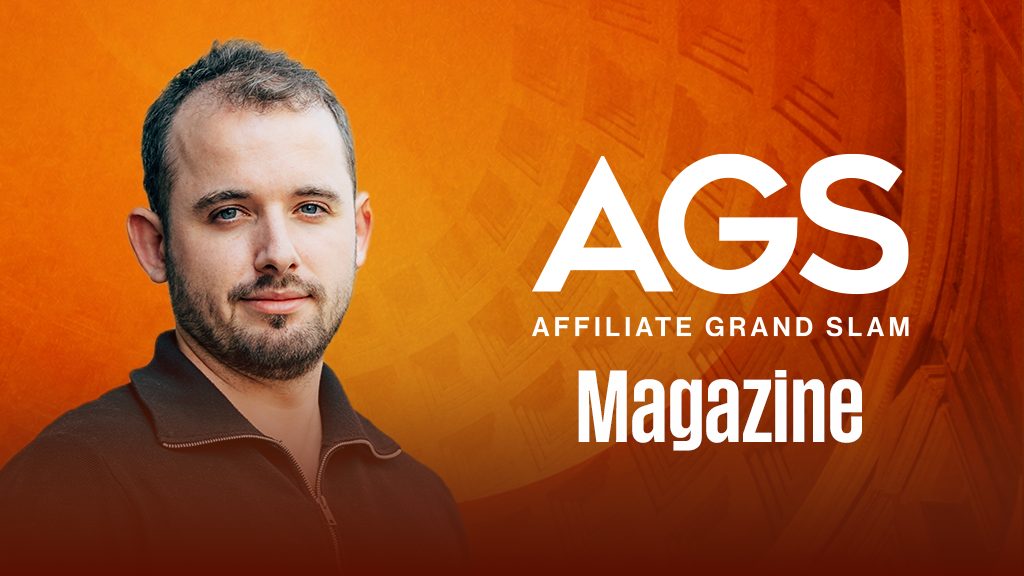
On average, people see around 30 ads a day. So if your ads all look the same, people eventually stop noticing them. But put something different in front of them, and there’s a better chance they’ll stop and pay attention. That’s where creative diversity comes in. Alexander Lodeweyckx, Co-Founder of ForesightIQ, brings experience from Tomorrowland and from scaling Loop from €10 million to €200 million as Head of Performance. He shares how to set up the creative diversity framework his team built to generate €200 million in annual revenue.
Alex describes creative diversity as a framework for creating and scaling ads. To explain how it works, he breaks it into three levels.
The first level is use cases. A product may already have a few proven use cases, such as travel, sleep or parenting, but those existing audiences can only take a business so far. To keep growing, Alex says brands need to identify the other reasons people buy and use the product. His first step is to ask customers why, how and when they use it. If the business is still new, he suggests looking at competitors’ customers instead. The answers can uncover use cases the team may never have considered on its own.
He saw that happen with Loop, the earplug brand he helped scale from 10 million to 200 million as Head of Performance. After asking customers how they were using the product, the team discovered that some were wearing them in restaurants and at social gatherings. Those weren’t use cases they had really focused on before, but once they created ads around them, another pocket of growth opened up.
The second level is formats and angles. Two people can want the same product and still need to be sold to in completely different ways. Alex gives himself as an example: he prefers a direct ad with a clear benefit, while someone else may want more information and a more editorial style before converting. That is why he has moved away from simply testing endless angles and now pays more attention to format styles. A short, fast-paced UGC video might work well for one audience, while another may respond better to longer-form content. Once a format proves itself, the team can test different angles within it and see how far it can scale.
The third level is aesthetics. This comes down to how the ad looks and feels. Some people respond to polished, highly designed creative, while others may be more drawn to something that looks like a handwritten note or an iPhone Notes screen. For Alex, the point is to keep changing how the message is presented so people do not start tuning it out.
“Anything that is new, a new format, a new ad, a new style, will always outperform variations you already made before,” he says.
Building creative diversity also comes with testing. The obvious metric is return on ad spend (ROAS). A creative can have a high click-through rate (CTR) and still convert badly, but if the ROAS works, that is ultimately what Alex looks at. From there, he looks at performance in two ways.
The first is straightforward performance marketing: which angles and messages are driving the ROAS the business needs. The second is looking more closely at the creative itself. That includes metrics such as thumb-stop ratio, hold rate and CTR. Alex prefers to look at trends across several batches rather than decide that one hook works because of a single ad. If a certain hook looks promising, run it across three or four batches. The same can be done with calls to action and the supporting proof within the script to see what consistently performs better.
But even when a creative does work, scaling it is less predictable. A team might run 20 to 50 experiments every week for three months without finding anything significant, then suddenly hit a creative or use case that opens up the next stage of growth. That unpredictability feeds into the framework Alex links to €200 million in annual revenue. He believes creative budgets should grow alongside media spend. As a rough benchmark, if a company is spending one million a month on ads, he would expect around 8% of that to go into creative, or roughly 80,000.
There’s also a ceiling on how far a performing creative can scale. If ten ads are working, making 100 may bring in more revenue. But by the time you are making 1,000 for the same audience or use case, you may already be reaching most of the people available to you.
Experimentation can help a brand grow, but Alex says there is still a balance to strike so the brand doesn’t become unrecognisable to its audience, especially existing customers. His approach is to define the legal limits and brand values from the start, then give the performance team room to experiment. If an unexpected format works, the brand team can then find a way to bring it into the brand’s style rather than blocking the idea before it has been tested.
Giving teams that freedom also means accepting that most experiments won’t work. Alex considers a creative hit rate of around 20% good, while 30% or 40% is already very strong. That means brands have to be comfortable with the fact that some creatives may never really take off. “You’ve got to accept. It means that four out of five creatives won’t see daylight, which is completely okay.”
For Alex, the next change in creative marketing is already happening. AI is making ads cheaper and faster to produce, and he expects that cost to keep falling. “The creation of ads, the marginal costs of creating an ad, will go to zero,” he says.
But if every brand can produce more creative for less, simply making more ads won’t give you much of an advantage.
He thinks that will put more pressure on the research behind the creative. In the past, a creative strategist might have divided their time fairly evenly between research, writing the brief, finding the right creator and giving feedback. Now that some of those production tasks are becoming easier, he sees stronger teams spending much more time understanding which creators, messages and creative patterns are driving performance before they develop the next batch of ads.
Alex believes this kind of research will become more important as AI makes it easier for everyone to produce decent-looking ads. Otherwise, brands risk creating more content simply because they can, including what he calls “AI slop”.
He also expects creative diversity to move beyond the ad itself. Brands can work with more creators and partners, explore different channels and test different funnels instead of always sending people through the same ad-to-product-page journey.
And that is where he sees marketing heading over the next two to three years.
This article was originally published in AGS Magazine. Explore the latest issue for more in-depth interviews, straightforward analysis and informed perspectives from across the affiliate and performance marketing industry.